


Off Grid Solar Inverter Overview
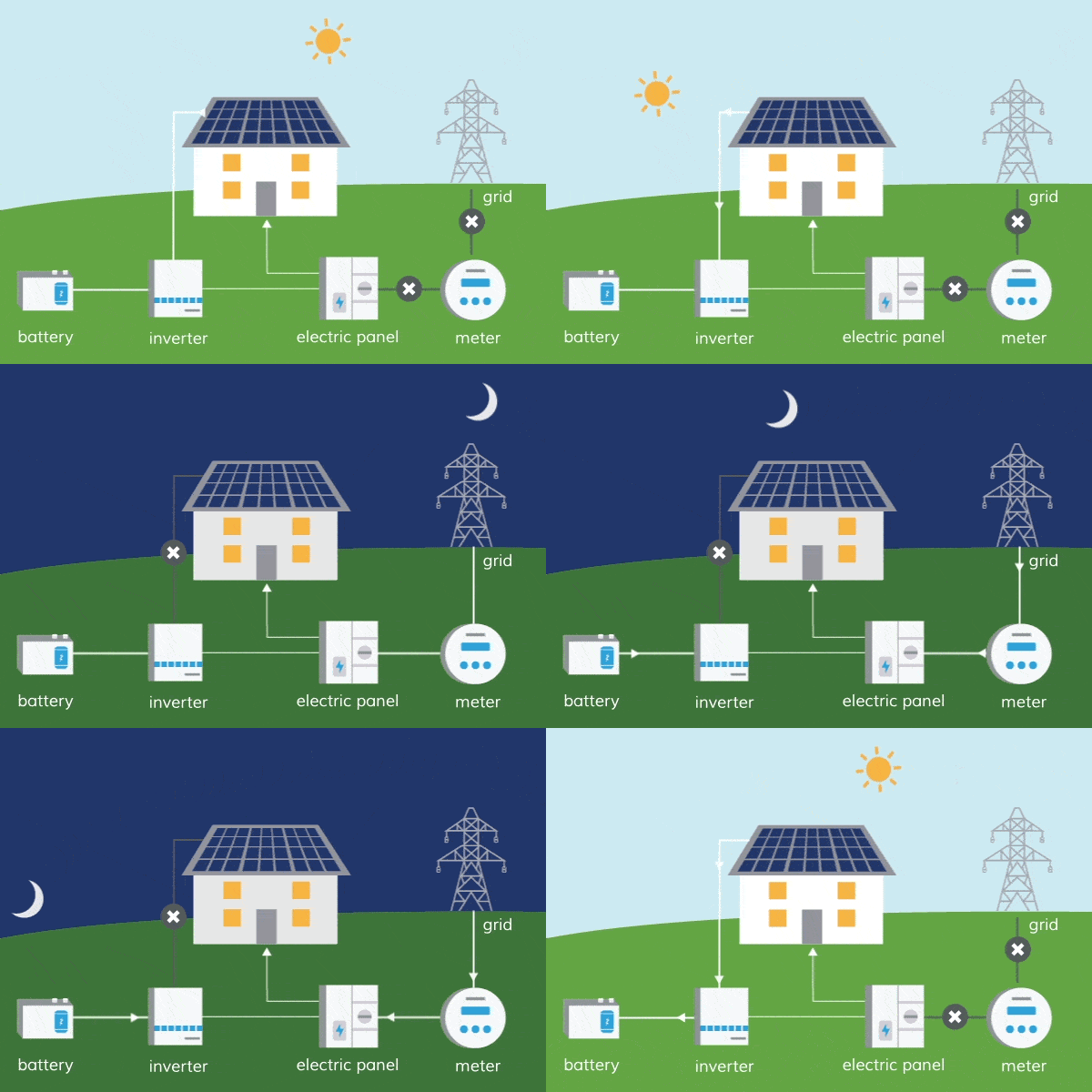
An off-grid solar inverter works in a specific way to convert the direct current (DC) electricity generated by solar panels into alternating current (AC) electricity, which is used to power electrical appliances and equipment in an off-grid solar power system. Here is a detailed explanation of how an off-grid solar inverter works:
Overview
An off-grid solar inverter, as the name implies, operates independently of the utility grid. It is an essential component in an off-grid solar power system, which typically includes solar panels, a charge controller, batteries, and the inverter itself.
Working Mechanism
- Solar Panel Energy Conversion:
- Solar panels convert sunlight into DC electricity. This electricity is then sent to a charge controller, which regulates the flow of energy to the batteries.
- Battery Charging:
- The charge controller ensures that the batteries are charged safely and efficiently. It prevents overcharging and ensures that the batteries are maintained at optimal levels.
- Energy Storage:
- The batteries store the DC electricity generated by the solar panels for later use. This stored energy is used when the sun is not shining, such as at night or during cloudy days.
- Inverter Conversion:
- When electrical appliances or equipment need power, the off-grid solar inverter takes the DC electricity stored in the batteries and converts it into AC electricity. This conversion process is crucial because most household appliances and equipment require AC electricity to operate.
- Power Delivery:
- The converted AC electricity is then delivered to the electrical appliances and equipment in the off-grid solar power system.
Advantages
- Independence from the Grid:
- Off-grid solar power systems are completely independent of the utility grid, making them ideal for locations where grid access is not possible or unreliable.
- Energy Self-Sufficiency:
- These systems are energy self-sufficient, and power outages on the utility grid will not affect them.
- Reduced Environmental Impact:
- By generating their own electricity, off-grid solar power systems reduce reliance on fossil fuels and help mitigate greenhouse gas emissions.
Disadvantages
- Higher Initial Costs:
- Off-grid solar power systems require batteries and other equipment, which can increase initial costs compared to grid-tied systems.
- Ongoing Maintenance:
- Batteries require maintenance and have relatively short lifetimes, which can add to ongoing costs.
- Energy Storage Limitations:
- Batteries have limited storage capacity, which can affect the system's ability to provide power during extended periods of low sunlight.
In conclusion, an off-grid solar inverter works by converting DC electricity generated by solar panels into AC electricity, which is then used to power electrical appliances and equipment in an off-grid solar power system. This independence from the utility grid provides several advantages, including energy self-sufficiency and reduced reliance on fossil fuels, but also comes with higher initial costs and ongoing maintenance requirements.
Two Types Off Grid Inverters Introduction
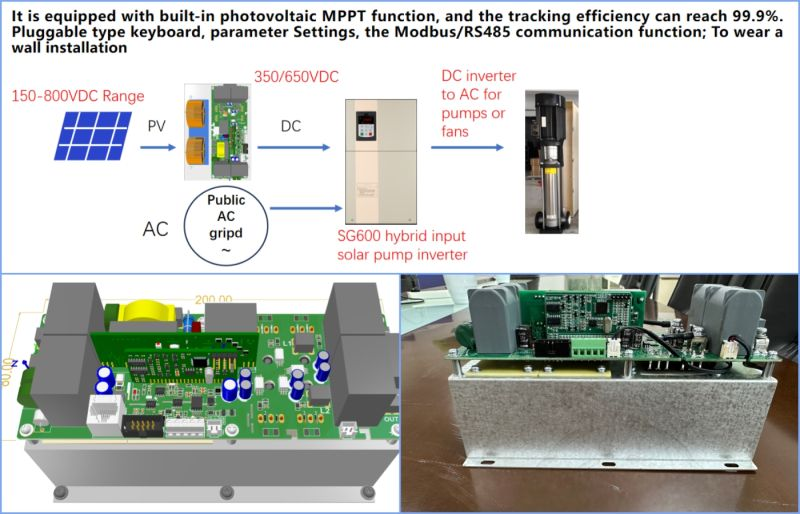
Advantages of Applying Special Inverter for Solar Water Pump
Related Article

SEND MESSAGE