


Solar Wator Pump System Introduction
Solar water pump systems, also known as photovoltaic (PV) water pumps, are an attractive and efficient method of water supply in regions with abundant sunlight, particularly in remote areas lacking electricity. These systems harness the readily available and renewable energy of the sun to provide a reliable, economical, and environmentally friendly source of water. Below is a comprehensive introduction to solar water pump systems.
1. System Components
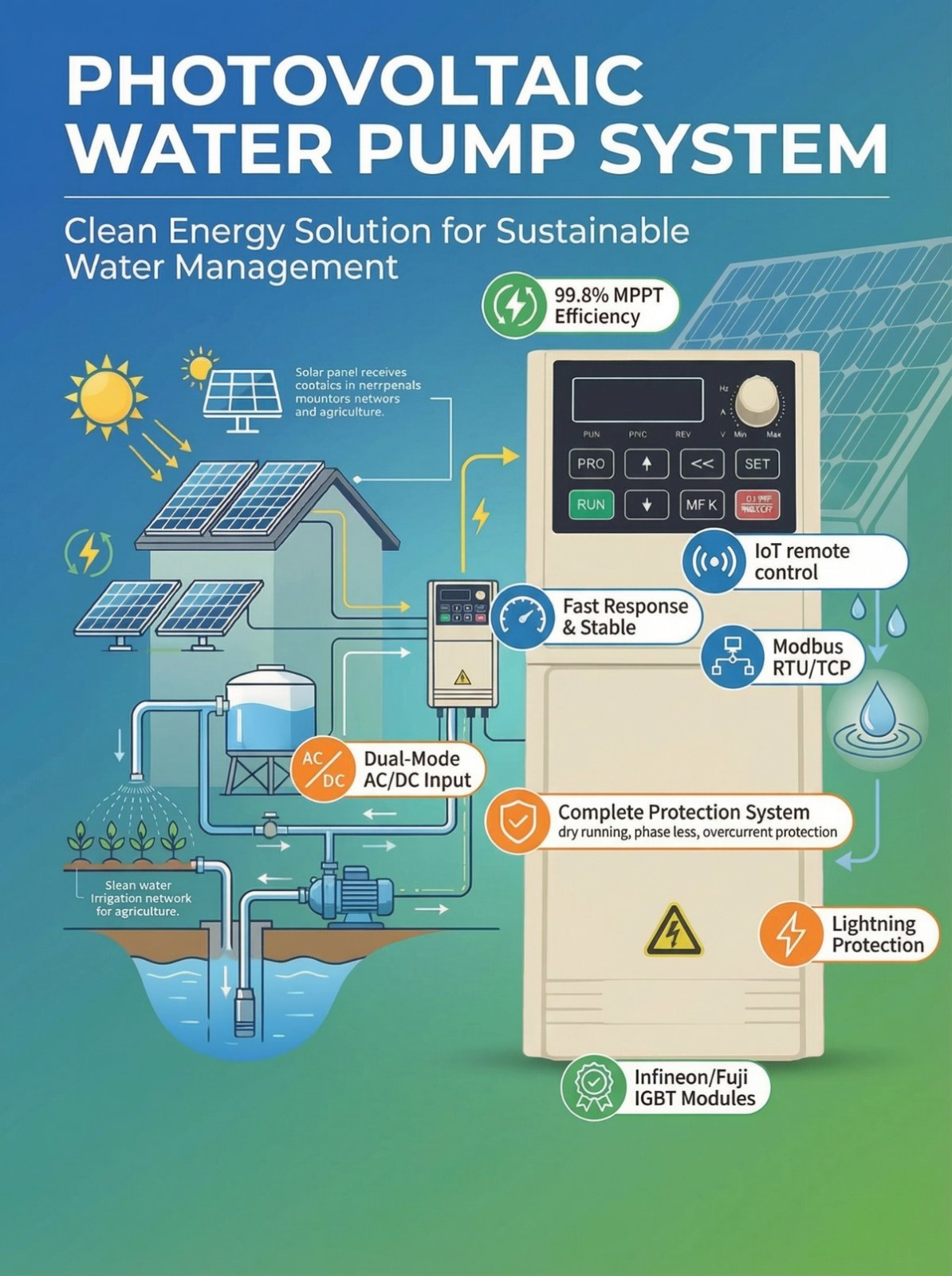
Solar water pump systems consist of three main components:
- Photovoltaic Array (Solar Panels): These convert sunlight into direct current (DC) electricity. The photovoltaic cells, made of semiconducting materials, liberate electrons within the material when struck by sunlight, generating an electrical current.
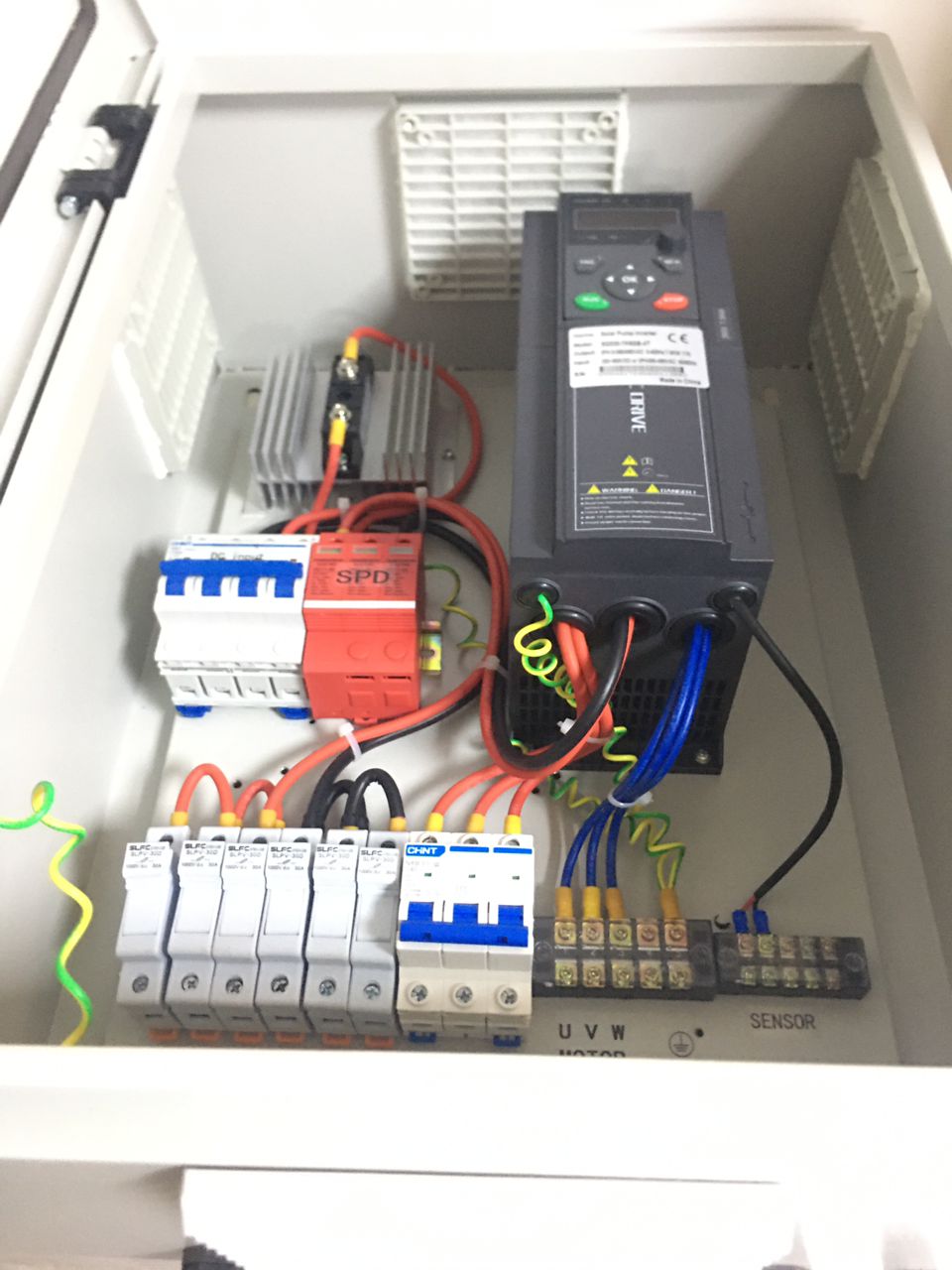
- Solar Pumping Inverter (Controller): The inverter converts the DC electricity from the solar panels into alternating current (AC) (or DC in some cases, depending on the pump motor) and controls the operation of the water pump. It adjusts the output frequency based on the intensity of sunlight to ensure maximum power output from the solar array.
- Water Pump: The pump uses the electrical energy provided by the inverter to lift or transport water. Various types of pumps, including centrifugal, axial, and positive displacement pumps, can be used depending on the specific requirements and conditions.
2. Types of Solar Water Pumps
Solar water pumps can be classified into two major categories:
- DC Water Pumps: These pumps are driven by DC motors, typically brushless DC motors or permanent magnet synchronous motors. They are known for their reliability, low noise, and long life due to the absence of carbon brushes.
- AC Water Pumps: These pumps use AC motors and require an inverter to convert DC power from the solar panels into AC power. They offer higher power ratings and are suitable for large-scale applications such as agricultural irrigation and desert reclamation.
3. Advantages
Solar water pump systems offer several advantages over traditional water supply methods:
- Reliability: Solar power requires minimal moving parts, making the system highly reliable.
- Safety and Environmental Friendliness: Solar pumps produce no noise, emissions, or harmful substances, making them completely environmentally friendly.
- Low Maintenance and Operating Costs: The systems are fully automated, requiring minimal human intervention, and have low maintenance costs.
- Economic Benefits: Long-term, solar pumps offer significant economic advantages over diesel-powered pumps, especially in areas with high fuel costs.
- Compatibility and Scalability: Solar power can be easily integrated with other energy sources, and the system can be easily expanded to meet growing demand.
- Wide Application Range: Solar pumps can be used in various applications, including domestic water supply, agricultural irrigation, and livestock watering.
4. Disadvantages
While solar water pump systems offer numerous advantages, they also have some limitations:
- High Initial Cost: The installation of solar panels and the associated equipment can be costly, particularly for large-scale systems.
- Energy Intermittency: Solar power is dependent on sunlight, which can lead to fluctuations in power output, especially in cloudy or rainy weather.
- Geographical Limitations: Solar pumps are most effective in regions with high levels of solar radiation.
5. Future Developments
As technology advances, solar water pump systems are becoming increasingly efficient and cost-effective. Future developments may include:
- Higher-Efficiency Solar Panels: Improved photovoltaic cells with higher conversion efficiencies will lead to more powerful and economical solar pumps.
- Intelligent Control Systems: Advanced control algorithms and sensors will enable more precise and efficient operation of solar pumps.
- Hybrid Systems: The integration of solar power with other renewable energy sources, such as wind or hydro, will further enhance the reliability and economic viability of solar water pump systems.
In conclusion, solar water pump systems represent an innovative and sustainable solution for water supply in remote and underserved areas. With their numerous advantages and potential for further development, they are poised to play a critical role in addressing global water challenges.
Variable Freqency Drive Principle Introduction
The Working Principle of Solar Hybrid Systems

SEND MESSAGE